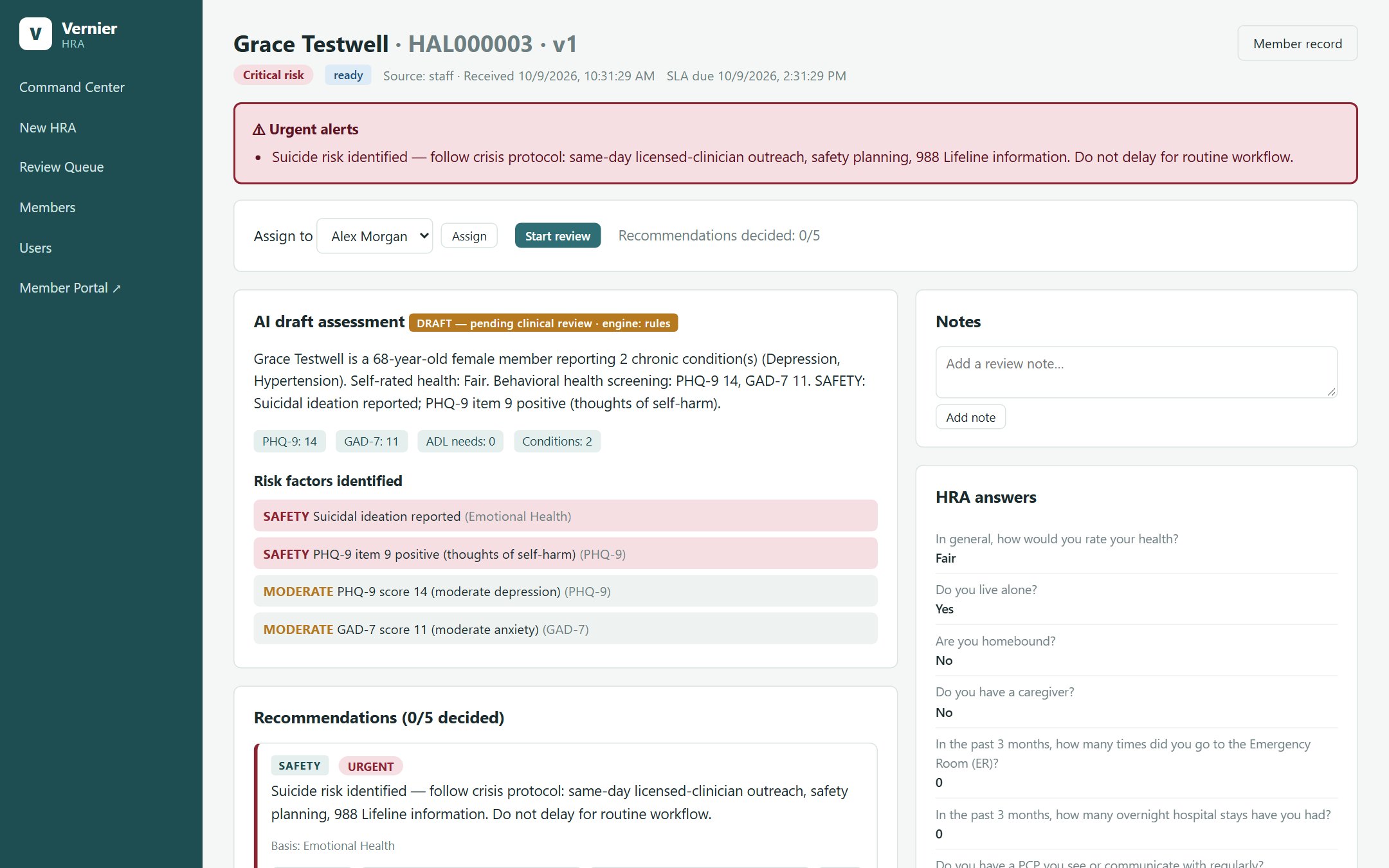
A health risk assessment that reassesses whenever the answers change.
From adaptive intake through a rules-based clinical assessment, nurse review and sign-off, to a member portal that always shows the last signed-off version. Nothing reaches the member without a nurse's attestation. Sold on compliance and care-plan value, not on risk-adjustment revenue.
Five stages, one record per member.
Adaptive intake
A full base questionnaire covering general health, medical history, activities of daily living, medications, preventive services, lifestyle and emotional health. Checking a chronic condition injects that condition's clinical follow-up module. Fourteen condition modules are included.
Validated screeners that escalate
PHQ-2 escalates to PHQ-9, GAD-2 to GAD-7, and a falls-risk battery opens when the answers warrant it. A positive suicide screen triggers an immediate on-screen crisis protocol and flags the record critical.
Assessment engine
Every submission is scored by a deterministic clinical rules engine: risk tier, red flags, per-condition care gaps and recommendations. A language model, when configured, drafts the narrative summary. Everything is a draft pending nurse review.
Nurse review and attestation
Inbound, assessed, assigned, in review, signed off and published. The nurse accepts, modifies or rejects each recommendation individually, adds notes, and signs an attestation with name, credentials and timestamp in an immutable audit trail.
Living document
A member-portal update creates a new HRA version that re-enters review. The portal keeps showing the last signed-off version until the new one clears. The annual reassessment date is tracked per member.
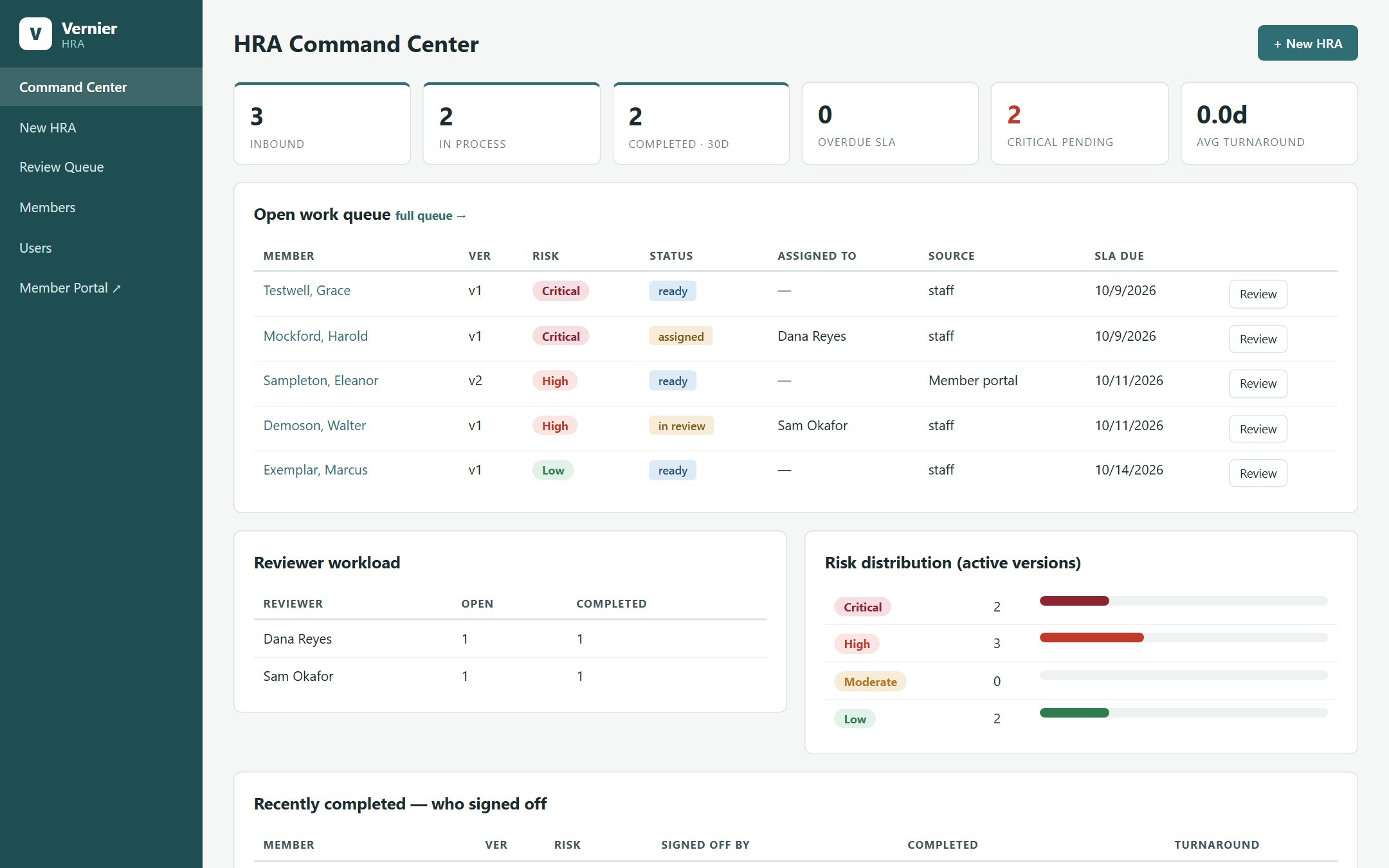
Command center
Inbound, in-process and completed counts, overdue against SLA, critical pending, average turnaround, reviewer workload, risk distribution, and a completed log showing who signed off on what.
Built around the SNP HRA requirement, and honest about the OIG.
CMS requires special needs plans to complete an initial health risk assessment within 90 days of enrollment and to reassess annually. Vernier HRA tracks the next reassessment due date per member and the command center exposes turnaround evidence for the file.
In October 2024 the HHS Office of Inspector General reported that health risk assessments drove billions of dollars in Medicare Advantage risk-adjusted payments. That finding makes "HRA as revenue" a liability. Vernier HRA is sold on compliance and on the care plan a nurse signs, not on the diagnoses it might surface.
- Platform-only model: your clinical team reviews and signs off.
- Full-service review by HALOS nurses, quoted on request.
- The crisis protocol wording is yours to approve with your medical director.