Eight modules. Each one a transaction a practice actually performs.
Verify eligibility. Request an authorization. Work a denial. The three things a practice does most often with a health plan each get their own screen, and the portal shows a practice nothing but its own panel.
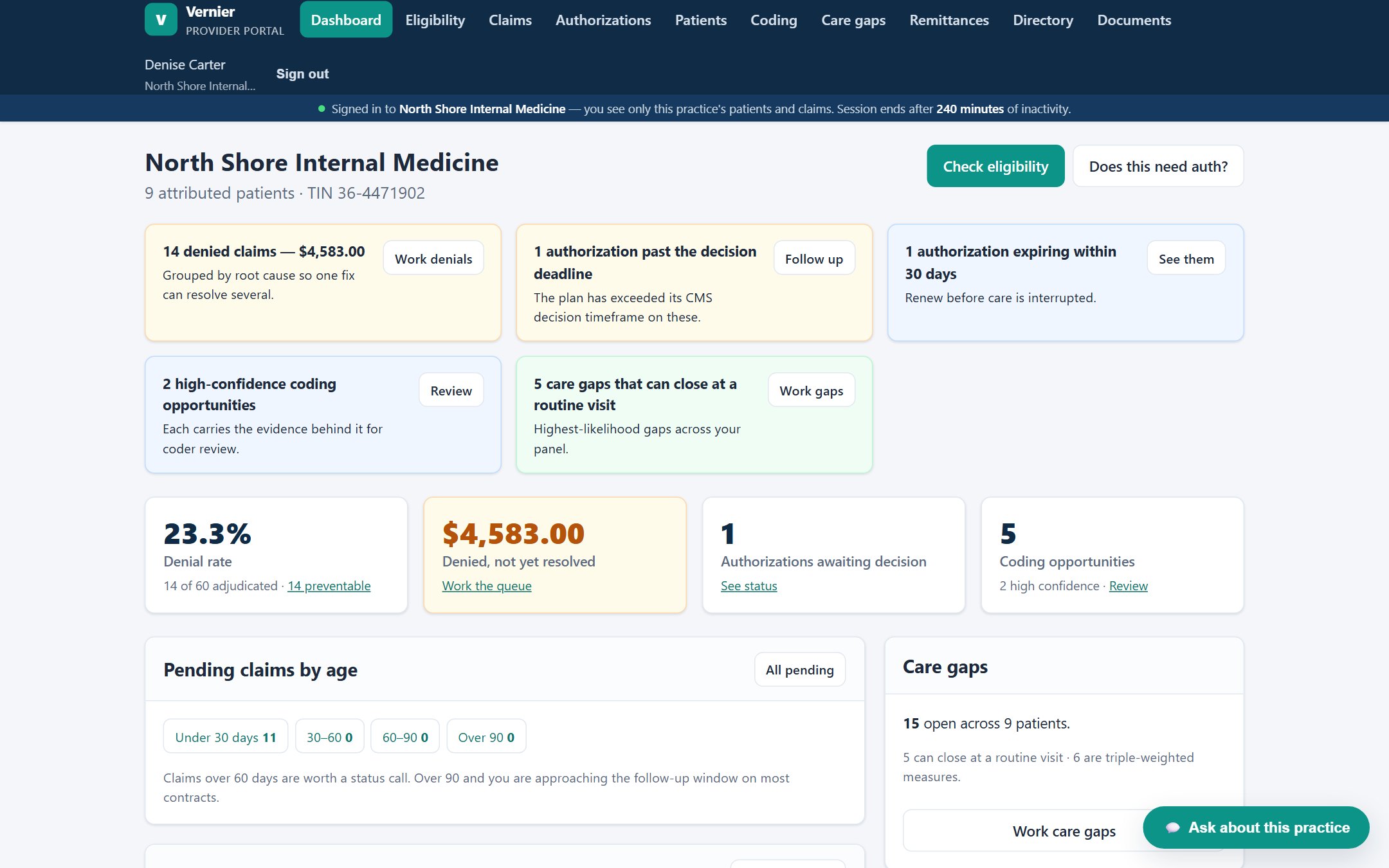
A provider portal with only provider transactions in it.
Plan financials, medical loss ratio, capitation and enrollment administration are the plan's business and stay on the plan's side. What a practice sees is the work it came to do. Provider abrasion is a Star Ratings problem and a network-retention problem, and a portal built around the practice's own transactions is the concrete fix.
Deliberately absent: plan revenue, medical loss ratio, capitation, member enrollment administration. Those are the plan's operations, not the practice's.
A practice sees its own NPIs and TIN panel. Nothing else exists.
Attribution is enforced in middleware, not per route. Every request carries a scope, and a route that forgets to filter cannot accidentally return another practice's data, because it has no unscoped query to reach for. Requesting another practice's record returns 404, not 403: the portal does not confirm that a record it will not show you exists.
Sign in as two practices side by side in a demo and watch their panels, claims, authorizations and remittances stay disjoint.
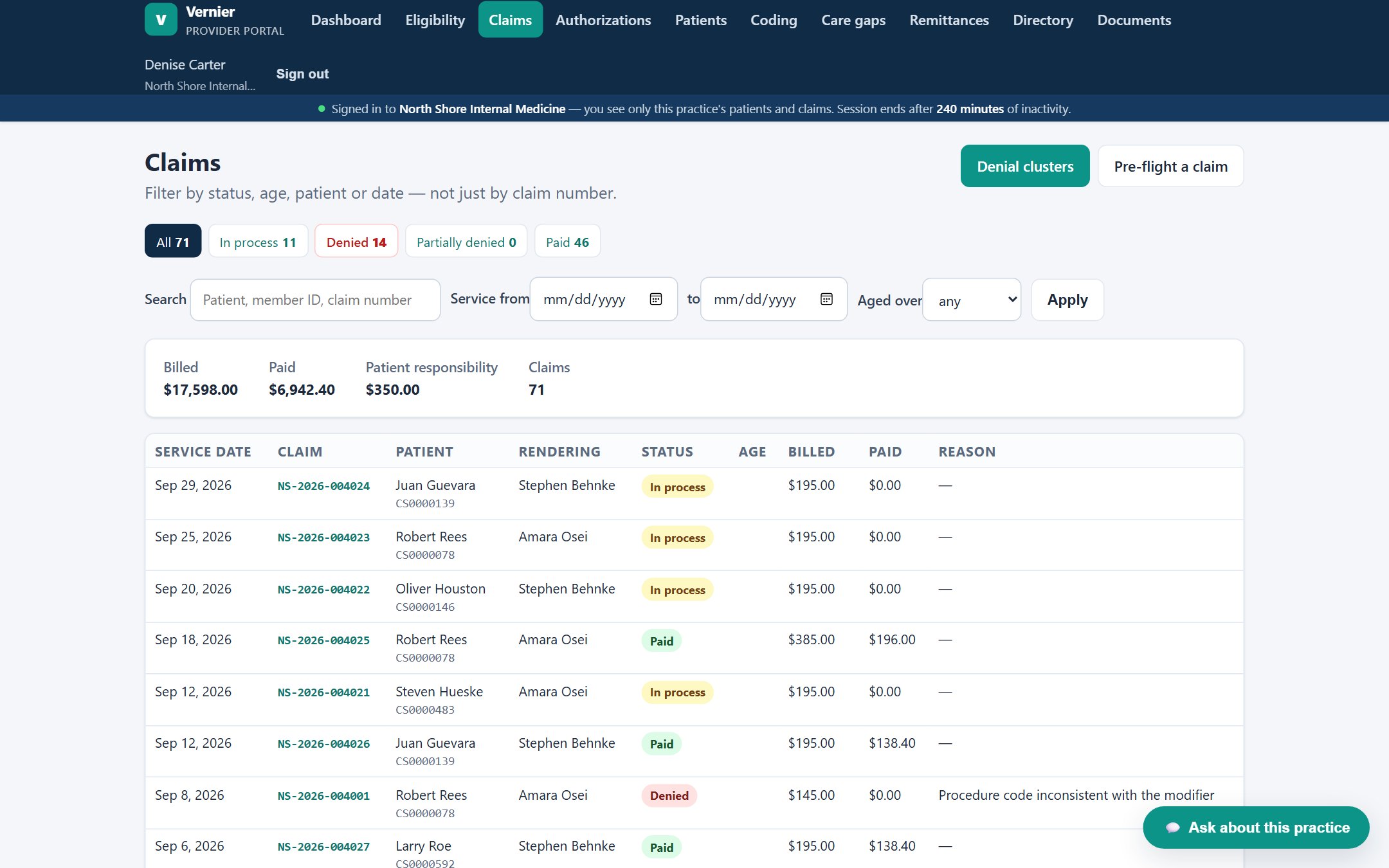
See the portal built around what your network actually does.
Twenty minutes: eligibility, an authorization and a denial, worked from the practice's side.